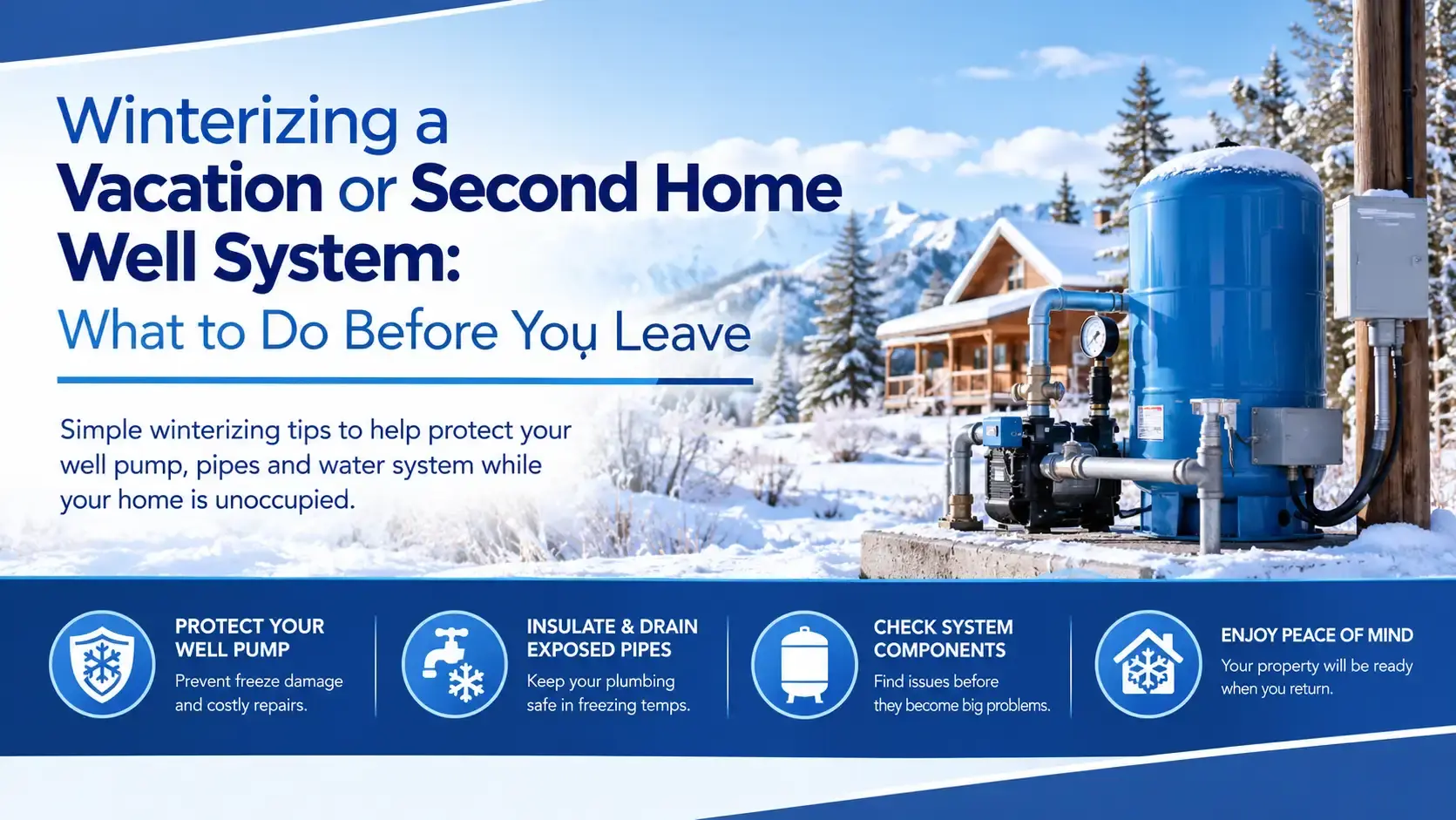
Winterizing a Vacation or Second Home Well System: What to Do Before You Leave
Getting your vacation or second home ready for winter usually comes with a long list of things to take care of. You need to lock the windows, unplug appliances, clear out the refrigerator, and make sure nothing important gets left behind. But if your property relies on a private well, there is one more job you should not overlook: protecting the well system.
When a home sits empty during freezing weather, a small amount of water left in the wrong place can become a big problem. That’s because water expands when it freezes, which can damage exposed pipes, pumps, tanks, valves, and other components. And if no one is staying at the property, that damage could go unnoticed until your next visit.
But proper winterizing well system preparation helps prevent those unpleasant surprises. So, if you’re getting your second home ready for winter, this blog will help you make sure your well system is ready, too.
| Get your well system ready before leaving for winter. Call Now! |
Why Does a Vacation or Second Home Well System Need Winterizing?
A vacation or second home needs winterizing because its well and plumbing may sit unused for weeks or months during freezing weather. During that time, water left sitting in pipes and other vulnerable components can freeze and expand, causing cracks, leaks, or other damage.
An occupied home normally has regular water use and indoor heat helping protect the system. But your vacation or second home is different. Once you leave, the temperature inside a pump house, crawl space, garage, or other unheated area can fall below freezing without anyone noticing. The parts most likely to need attention include –
- Water lines that are exposed to the cold
- Jet or booster pumps located above ground
- Pressure tanks kept in unheated areas
- Outdoor faucets with hoses still attached
- Pipes running through garages or crawl spaces
- Water treatment equipment
- Above-ground plumbing near the well
- Pipes inside the house
A submersible well pump is usually less exposed because it sits underground, but that doesn’t mean the entire system is protected. Above-ground components connected to the submersible well pump, along with household plumbing, can still freeze. That is why well pump winterizing should look at the whole water system and not just the pump itself.
How Do You Winterize the Well System in Your Second or Vacation Home?
Winterizing a well pump and plumbing system generally involves shutting down the appropriate equipment, removing water from vulnerable lines and components, and protecting anything that will remain exposed to freezing temperatures.
The exact procedure varies by system, but these are the main areas to address –
1. Inspect the System Before You Shut It Down
Start while the water is still running normally. This gives you a chance to spot problems instead of discovering them when you return months later. You can walk around the well and accessible equipment and look for –
- Leaking pipes or fittings
- Cracks or corrosion
- Damaged pipe insulation
- Unusual pump noises
- Problems with the pressure tank
- A damaged or loose well cap
If something already looks questionable, winter weather will not make it better. So, repairing a small problem before you leave can save you from dealing with a much larger one later.
2. Shut Off Power to the Pump When Appropriate
If you are completely shutting down the water system, turn off electrical power to the well pump before draining the system. This prevents the pump from accidentally operating when the system has been emptied.
Also, well systems can include pressure switches, control boxes, booster pumps, treatment equipment, and other electrical components. So, do not simply flip switches until you know how your particular system works. If you are unsure about the correct shutdown sequence, this is a good point to call a professional rather than guess.
3. Drain Water From the Plumbing
Even a small amount of water left in the plumbing can freeze while you’re away. So, if you’re shutting down your second home for the season, open the appropriate faucets and valves to help drain water from the lines. Pay particular attention to –
- Outdoor faucets
- Low points in the plumbing
- Pipes running through unheated areas
- Shower and sink lines
- Toilets and other fixtures
- Water heaters
- Water treatment equipment
Some systems may also need compressed air to clear water that remains trapped in the plumbing lines. However, using too much pressure can damage pipes or other components, so it’s best to have a professional handle this step if you’re unsure how to do it safely.
And don’t forget to disconnect the garden hose. If you leave it attached, water can remain trapped in the faucet or connecting pipe and freeze.
4. Protect the Well Pump
The right approach to well pump winterizing depends heavily on the type of pump you have.
- A submersible pump sits inside the well and is normally protected by the surrounding ground. An above-ground jet or booster pump, however, may be located in a pump house, garage, basement, or another area that can freeze.
- If an above-ground pump will not be used through winter, it may need to be drained according to the manufacturer’s instructions. If it will remain operational, the surrounding area needs adequate protection from freezing.
Simply wrapping the pump in a blanket may not provide enough protection. The connected pipes, valves, pressure equipment, and the area around the pump also need to be protected from freezing.
5. Check the Pressure Tank
Your pressure tank helps maintain steady water pressure and reduces unnecessary pump cycling. So, if your pressure tank is in an area that can freeze, make sure it is protected before you leave.
- If you are shutting the water system down completely, the tank may need to be drained
- A tank that will remain in use needs to stay protected from freezing temperatures
Before you leave for the season, also check the tank for leaks, corrosion, unusual pump cycling, or pressure problems so you can take care of any issues before winter sets in.
6. Insulate Components That Will Remain in Service
If you plan to leave the water system running while you’re away, make sure exposed components are protected from freezing. Pay particular attention to –
- Pipes in garages, crawl spaces, basements, and pump houses
- Exposed lines that can be covered with foam pipe insulation
- Areas where properly installed heat tape may be appropriate
Also check the pump enclosure for gaps around doors, windows, or walls where cold air can get in. If you use heat tape or another electrical heating product, always follow the manufacturer’s instructions before installing or turning it on.
Read More – Winterize It! Tips and Best Practices for Pump Winterization
How Should You Protect the Wellhead During Winter?
Your wellhead may be outside in the snow, but it should not simply be buried under any insulation you have on hand.
- Start by taking a look at the well cap and casing. Make sure the cap is firmly in place and look for any cracks or damage in the casing. Keeping both in good condition helps stop snow, debris, and surface contaminants from getting into your well.
- Avoid making changes that interfere with proper well construction or access.
If you believe the wellhead needs additional cold-weather protection, ask a well professional what is suitable for your setup.
Should You Keep the Heat On or Drain the Well System?
Whether you should keep the heat on or drain the system depends on how you use the property during winter.
- If you occasionally arrive for a winter weekend, completely shutting down and restarting everything after every visit may not be practical. You may instead keep the house heated and make sure vulnerable well components and pipes remain protected.
- If you won’t return until spring, draining vulnerable parts of the system may be a better option than relying on heat for several months.
Common Winterization Mistakes That Can Cost You Later
Most winterization mistakes seem harmless when you are packing the car and trying to get home. But unfortunately, they can become expensive by spring. So, watch out for these common oversights –
- Shutting off the pump but leaving water in exposed pipes
- Leaving hoses connected to outdoor faucets
- Thinking a submersible pump means the whole system is safe from freezing
- Leaving an above-ground pump exposed to the cold
- Putting off small leaks until spring
- Overlooking water treatment equipment
- Depending on a space heater as your only source of freeze protection
- Turning the system back on in spring without checking for leaks first
A few extra minutes spent checking the system can be much easier than arriving for your first spring weekend and finding water on the floor.
| Protect Your Well Before Winter Hits – Call 775-851-1600 |
What Should You Do When You Return in Spring?
Restarting your water system deserves the same care as shutting it down. So, here’s what you need to do when you return to your vacation home in spring –
- Do not rush to turn everything on and immediately start using water throughout the house.
- Instead, check accessible pipes, fittings, the pressure tank, and pump equipment first.
- Then restore the system according to the proper procedure for your setup.
- As pressure returns, watch carefully for –
-
- Dripping fittings
- Cracked pipes
- Unexpected pump cycling
- Low or fluctuating pressure
- Strange pump noises
- Water appearing where it should not
Catching a leak during startup is much better than discovering it after it has been running unnoticed.
Read More – Why Spring Is the Best Time for Water Well Maintenance?
What Should You Know About Winterizing a Vacation Home Well?
1. Does a submersible well pump need to be removed for winter?
Generally, no. A submersible pump sits deep inside the well, where the surrounding earth helps protect it from freezing temperatures. The bigger concern is usually the above-ground equipment and plumbing connected to it. Before you leave for the winter, check the area for exposed pipes, add insulation where needed, and make sure any water that could freeze is properly drained.
2. Can I use RV antifreeze in a vacation home’s plumbing?
Plumbing winterization sometimes involves non-toxic RV/marine antifreeze in certain drains, traps, or fixtures. But you should not put antifreeze into the well itself or well equipment unless specifically directed by a qualified professional or equipment manufacturer. The correct approach depends on your home’s plumbing and treatment systems.
3. How early should I winterize my second home’s well system?
Do it before sustained freezing temperatures arrive and, ideally, when you close the property for the season. Waiting for the first hard freeze leaves little room to fix leaks, damaged insulation, or other problems you discover during the process.
Takeaway
Before you lock up your second home for winter, give the well system one final check.
- Drain water from vulnerable lines, protect exposed pipes and above-ground equipment, check the pressure tank and wellhead, and make sure anything left running is protected from freezing.
- Most importantly, plan around how long you’ll be away. If the home will sit empty for months, don’t rely on heat alone to protect the system.
A little extra preparation before you leave can mean returning to running water instead of frozen pipes or damaged well equipment.
| Protect Your Vacation Home’s Well This Winter – Call 775-851-1600 |
Prepare Your Well for Winter With Bruce MacKay Pump & Well Service Inc.
When you’re leaving your vacation or second home for months, you want to know its well system is in capable hands. That’s where experience matters. As an A+ BBB-accredited company, Bruce MacKay Pump & Well Service Inc. has served homeowners across Northern Nevada and Eastern California since 1981, with more than 100 years of combined industry experience behind our work.
We are licensed (NV License #23095), insured, and available for 24/7 emergency service, giving you one less thing to worry about while you’re away. Whether you need help preparing your well system, water pump repair in Reno, or water pump replacement after a failure, we can help you protect the system you depend on.
You can call us at 775-851-1600 to schedule your service.