
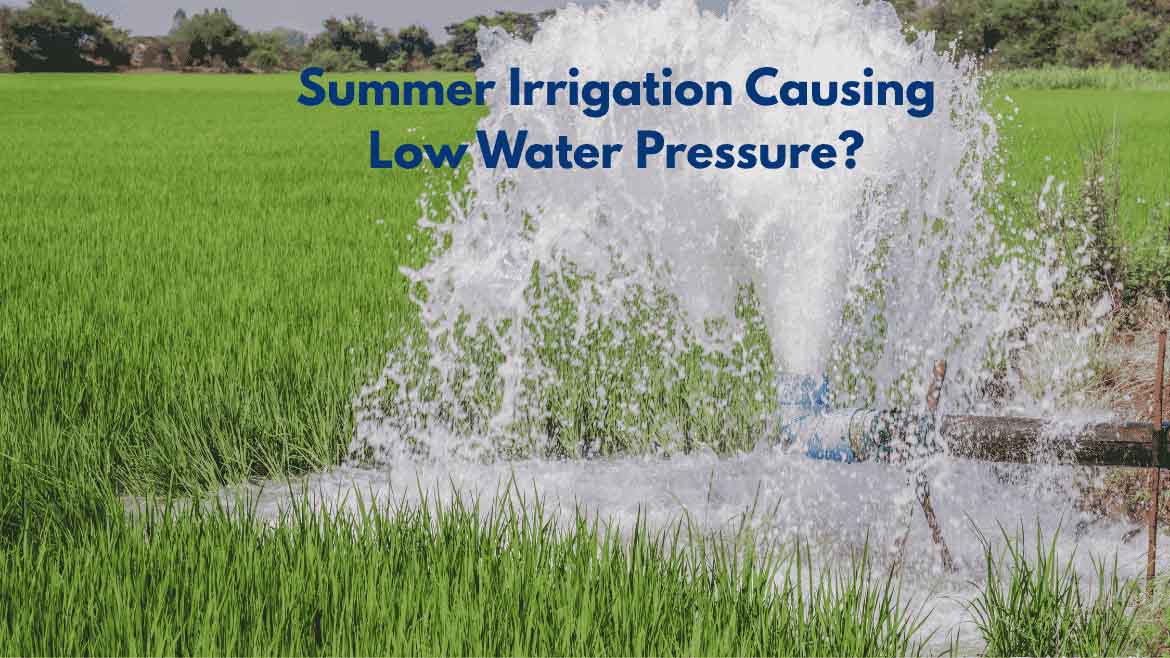
Why Your Water Pressure Drops When Irrigation Starts During The Summer Season
Every summer, the scene plays out the same way: the Sun is shining bright, your lawn needs water, and you are finally ready to turn on your irrigation system. But something feels off.
Your sprinklers pop up, and the system starts running just fine, but soon enough, the water pressure drops, the sprinkler’s head weakens, and an uneven and ineffective spray follows.
This is the point where most homeowners realize that they have a problem at hand. Well, if you are facing a similar problem, you are not alone.
Water pressure drops during the irrigation season is one of the most common problems for the well-based systems.
So, what can you do to fix it, and what is causing the issue?
In this blog, we will try to break down the main causes of this issue and how to correctly diagnose it.
| Restore Steady Water Pressure Today, Call Now! |
What Causes Water Pressure to Drop When Irrigation Starts?
The irrigation system is trying to deliver more water than it can manage at one time. Most times, the well capacity is the main cause; however, there might also be other factors that contribute to this phenomenon:
- Undersized pipes restricting water movement
- Too many sprinkler zones are running at once.
- Clogged filters or dirty sprinkler heads
- Leaks in the irrigation system
- Faulty pressure regulators
- Partially closed valves
The main issue here is quite simple: You need to recognize the exact cause before deciding on repairs or upgrades.
The Difference Between Water Pressure and Water Flow
To understand this problem in detail, you need to know the difference between pressure and flow.
- Water pressure is the force pushing water through your pipes.
- Water flow is the amount of water available (usually measured in gallons per minute).
This difference matters more than most people realize. The concept is that, despite having enough pressure, your irrigation system might suffer if you do not have enough flow to support it, or vice versa. Once the irrigation starts, both these aspects need to work hand in hand for a sufficient water supply.
Are Older Wells Struggling To Meet The Modern Home Water Demands?
If your house is about 20 to 30 years old, your well system might not be designed for the latest water usage demands.
Back then, properties generally comprised the following:
- Smaller lawns
- Fewer irrigation zones
- Less overall water demand
Currently, the situation is quite different, as most homes now require more water because of the expansion in landscaping and numerous usage points.
Hence,
- Older wells may not produce enough water.
- Pumps may be undersized for current needs.
- Systems struggle once the irrigation starts.
This is usually the reason why the pressure problems occur suddenly, even if the system has worked fine in the past.
How Do You Know If Your Well Can Handle Irrigation?
Try out Flow Testing
A flow test is all about the volume of water that your well can produce over time. It is one of the most reliable ways to understand if your system can manage irrigation demands or not.
A proper flow test reveals:
- The recovery rate of the well: how quickly it can refill.
- The capacity of the pump: the volume of water that it can deliver.
Example:
If your irrigation system’s demands are 15 gallons per minute, but your well can produce only 10 gallons per minute, then there will be a pressure drop every time you run the sprinklers.
Here, it is not a ‘timing’ issue but a limitation of the supply.
When Do You Need Water Pump Repair vs. Replacement?
Sometimes, the main problem is the pump and not the well altogether.
Signs your pump may need repair:
- Sudden drop in the pressure
- Irregular cycling, i.e., turning on/off quickly
- Basic performance problems
Signs you may need an upgrade:
- The pump is more than 10 years old.
- Pressure drops significantly during irrigation.
- There is an increased water demand in your household
So you see, here, ignoring these issues can result in a complete failure of the pump altogether.
| Solve Low Water Pressure Issues Today, Call Now! |
Can You Fix Low Pressure Without Replacing Your System?
Mostly, yes.
Before investing in a new pump or a well upgrade, here are some practical fixes:
- Run fewer sprinkler zones at the same time
- Clean clogged filters and sprinkler heads
- Fix leaks immediately
- Check valves and pressure regulators
Installing a storage tank is also a recommended solution. This way, the storage tank will allow your well to fill water gradually, while your irrigation system continues to draw water as and when required. This process helps reduce stress on your pump.
What Happens If You Ignore Low Water Pressure?
Ignoring the problem can result in:
- Pump burnout due to overuse
- Increased energy expenses
- Uneven irrigation coverage
- Expensive emergency repairs
- Damaged landscaping
Taking care of these issues can easily save both time and money.
Questions Homeowners Often Ask!
1. How do I know if I need a pump repair or upgrade?
The repairs and upgrades need to be done according to the age of your system and the flow test results. You need to upgrade your system if it is older and struggling with increased water demands from modern irrigation needs. On the other hand, you might need to repair it if it is relatively new, or a professional inspection is the best way to determine the right approach.
2. Is a flow test worth the cost?
Yes. A flow test is like a health check for your well system. It helps recognize issues early and prevents expensive emergency repairs during peak summer months.
3. Will running sprinklers for less time fix the issue?
No. The problem isn’t how long the system runs; instead, it is how much water is available at one time. If your well is unable to meet the demand, pressure will drop irrespective of runtime.
4. Can I upgrade my pump without testing my well?
It is not recommended. If your well cannot supply enough water, a larger pump will not solve the problem and may even cause further strain on the system.
Read More!
- Well Pump Troubleshooting: What to Do When You Have No Water Pressure
- Water Well Pump Diagnosis and Repair: The Only Guide You Need
- Important Maintenance for Your Water Pump and Well
- Emergency Water Pump Repairs: What to Do When Your Pump Fails
Final Words
So, you see, low water pressure during irrigation is a clear sign that your system requires attention. Whether the problem is in your well, pump, or irrigation setup, recognizing the root cause early can prevent major problems in the future. The longer you wait, the greater the risk of system failure and costly repairs.
| Get Steady Pressure Again, Schedule Your Appointment! |
Get Your Well System Ready With Bruce MacKay Pump and Well Service, Inc. Before Summer Demand Peaks
In a nutshell, if you notice a drop in the water pressure once the irrigation starts, it is time to take action. For this, a professional diagnosis is recommended in order to determine if you need a flow test, system adjustment, or a water pump repair in Reno to revive proper performance.
It is time to take action before your lawn turns brown or your system fails altogether. Contact Bruce MacKay Pump and Well Service, Inc. at 775-851-1600 to make sure your irrigation system is summer-ready!