
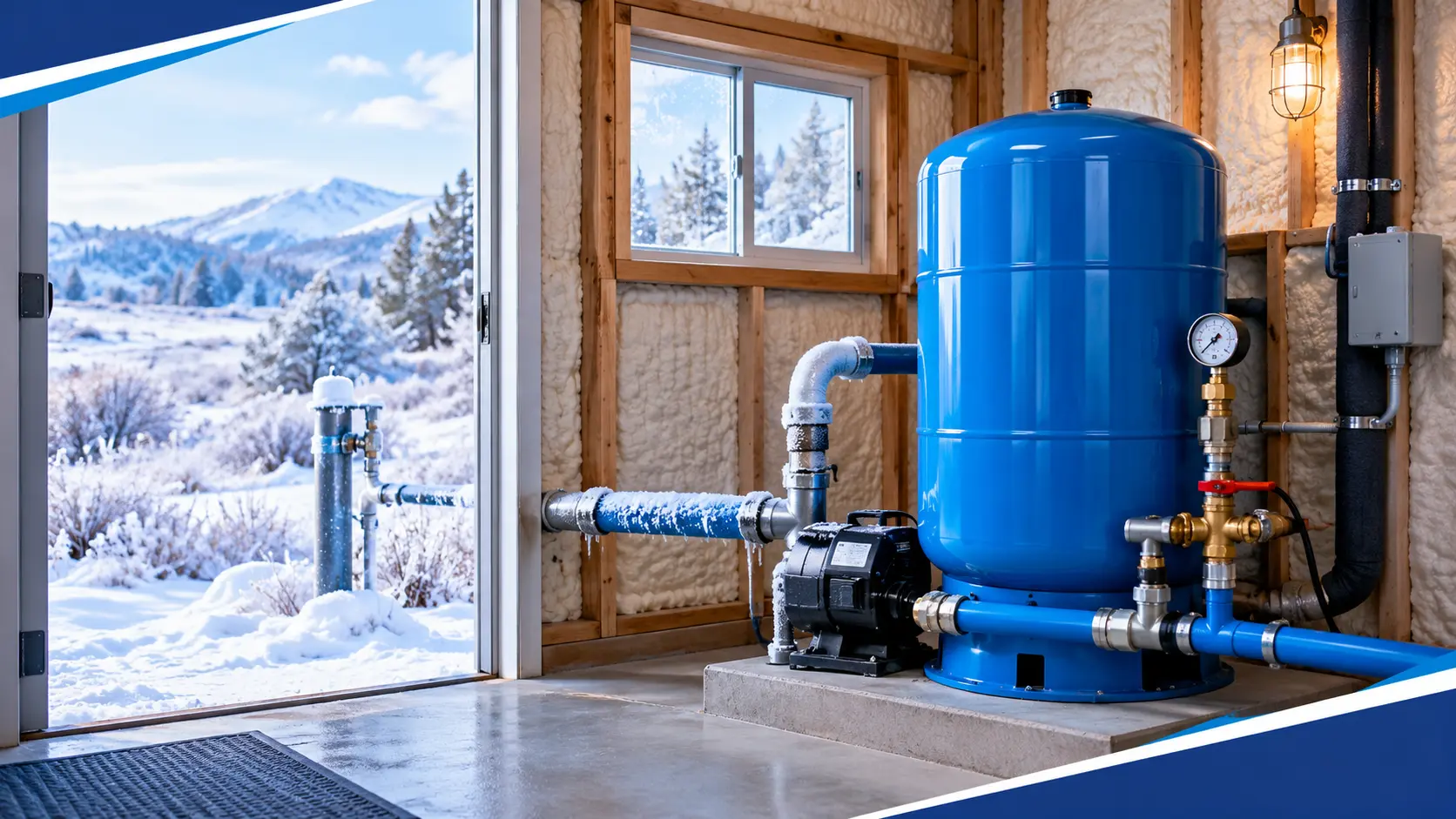
How to Protect Your Pressure Tank From Freezing
A cold night can cause more trouble for a well system than many homeowners expect. Your well may be underground, but the equipment that delivers water to your home is often placed in an unheated garage, crawl space, pump house, or outdoor enclosure.
That makes pressure tank freezing a real concern during severe winter weather.
When water freezes, it expands. That expansion can damage pipes, fittings, valves, and other parts of the system. A frozen component may leave you with low water pressure or no water at all.
The good part is that you can prevent most freeze problems with the right preparation. Here is how to protect your water pressure tank before temperatures drop and what to watch for when winter weather gets severe.
| Get winter pressure tank protection. Call Now! |
Follow These Steps To Protect a Pressure Tank From Freezing
Start with the space around the tank. A well-insulated enclosure can help hold onto heat and reduce direct exposure to cold air.
-
Seal Cold Air Out
Check for any gaps around the door, walls, access panels, or places where pipes enter the building. Seal those openings so cold air cannot blow directly onto the tank and plumbing.
Remember, even a small draft can make exposed pipes much colder than the surrounding air.
-
Insulate the Tank and Pipes
Insulation slows heat loss and helps protect your well equipment from sudden temperature changes.
Depending on the installation, protection may include an appropriate insulating tank cover or blanket and foam pipe insulation around exposed water lines.
Pay particular attention to:
- Pipes entering and leaving the tank
- Elbows and fittings
- Valves
- Tank tee
- Small pressure-related lines
- Plumbing near exterior walls or openings
Don’t cover electrical components or safety devices in a way that prevents inspection or service.
Here’s one thing you should always remember: Insulation slows heat loss but does not create heat. If an enclosure remains below freezing for a long period, insulation alone may not be enough.
Which Parts of the Pressure Tank System Often Need Protection?
When preparing pump pressure tanks for winter, don’t look only at the tank body. Check the components connected to it as well.
| Component | What to Check Before Winter |
| Pressure tank | Insulation and surrounding temperature |
| Exposed pipes | Missing insulation and cold-air exposure |
| Tank tee and fittings | Cracks, leaks, and exposed sections |
| Pressure switch | Cold exposure and proper operation |
| Valves and connections | Standing water and insulation |
| Well house or enclosure | Drafts, gaps, and overall insulation |
When Do You Need Supplemental Heat?
If your pressure tank or exposed plumbing regularly faces freezing temperatures, passive insulation may not be enough. Here are a few supplemental heat options.
- Listed heat cable designed for the specific plumbing application can help protect compatible pipes. Follow the manufacturer’s installation and electrical instructions carefully during DIY installations.
- A properly designed heated pump enclosure may also be an option in areas that experience prolonged cold and below freezing temperatures.
You must avoid improvised heating methods. Never use an open flame or torch to warm frozen well equipment or plumbing. If you’re unsure what type of freeze protection your system needs, have a well professional inspect the installation. The right solution depends on factors such as the tank location, plumbing layout, insulation, and winter conditions.
What Should You Check Before the First Hard Freeze?
If you live in Northern Nevada, you know winters here can bring long periods of freezing weather. Therefore, it’s best to check your well system before temperatures drop.
Your Pre-Winter Pressure Tank Checklist
- Locate the pressure tank for the water pump and check whether the surrounding space is heated.
- Inspect exposed plumbing for missing or damaged insulation.
- Seal drafts around the pump house, garage, or enclosure.
- Protect vulnerable pipes and fittings with suitable insulation.
- Look for existing leaks or pressure problems.
- Plan for extended freezes and power outages, not just one cold night.
- Winterize seasonal properties that will be left without heat.
- Schedule professional service if the tank, pump, pressure switch, or plumbing already shows signs of trouble.
A few checks before the first hard freeze can be much easier than dealing with frozen plumbing or a loss of water in the middle of winter.
Read More – Preparing Your Water Well for Winter: Essential Tips for Cold Weather Maintenance in Northern Nevada
| Protect your water pressure tank from freezing. Call 775-851-1600! |
What Are the Signs of Pressure Tank Freezing?
A frozen well system may not always show obvious signs like ice on the pipes. Instead, you may notice issues, like:
- No water at the faucets
- A sudden drop in water pressure
- Water that trickles instead of flowing normally
- Frost or ice around exposed pipes
- Unusual pump or tank noises
- A pump that runs but does not restore normal pressure
- Leaks after temperatures rise
A word of cautIon – “No water” doesn’t automatically mean your well pump has failed. A frozen pipe, fitting, pressure switch, or other component can cause similar symptoms. That is why it is always best to hire a professional to inspect your system before coming to a conclusion.
What Should You Do If Your Pressure Tank Freezes?
If you suspect part of the system has frozen, don’t keep forcing the pump to run when no water is flowing.
First, turn off the pump if it is running without producing water. Then inspect accessible areas for frost, ice, leaks, or damaged plumbing.
Never use a torch or open flame to thaw frozen pipes. Avoid trying to break or chip away ice inside a pipe. Frozen water may have already damaged the pipe, and forcing the system back into operation can turn a small crack into a major leak.
Once the system thaws, check for:
- Cracked or leaking fittings
- Water around the pressure tank
- Abnormal pressure
- Rapid pump cycling
- A pump that will not shut off normally
If you cannot identify the problem, have an experienced well technician inspect the system before repeatedly restarting it.
Common Questions About Pressure Tank Freezing
1. Can a well pressure tank actually freeze?
Yes. A water pressure tank and its connected plumbing can freeze when exposed to freezing temperatures for prolonged periods. This risk is highest in unheated areas like pump houses, garages, crawl spaces, or outdoor enclosures. Smaller pipes, valves, and pressure switches often freeze first, cutting off your water supply before the tank itself freezes.
2. Will wrapping my pressure tank in a blanket keep it from freezing?
An insulating cover can slow heat loss, but it doesn’t generate heat. If the surrounding area remains below freezing for an extended period, the tank or connected plumbing may still freeze. The enclosure, pipes, fittings, and controls also need attention. An experienced well professional can determine whether insulation is enough or if additional freeze protection is needed.
3. Should You Drain the Pressure Tank for Winter?
If your home is occupied and heated through the winter, you do not need to drain the pressure tank. However, if you are leaving a seasonal cabin, vacation home, or vacant property where the heat will be turned off, you must properly winterize the system. This involves turning off power to the well pump and completely draining the tank and connected plumbing to prevent freeze damage. If you aren’t familiar with the equipment, have a well professional manage the winterization to avoid damaging the pump or controls.
Takeaway
Preventing pressure tank freezing is about protecting the whole well system, not just covering the tank.
Before winter, check the enclosure, seal cold-air leaks, insulate exposed plumbing, and plan for prolonged freezing temperatures. If the property will be left without heat, have the system properly winterized.
And if you notice low pressure, no water, leaks, or unusual pump behavior during a freeze, get it checked early to prevent a small freeze-related problem from becoming a larger repair.
Read More!
- Restore Your Well Pump After a Power Outage Quickly
- Common Myths About Well Water You Shouldn’t Believe
- How to Increase Water Pressure from a Well?
- Winterize It! Tips and Best Practices for Pump Winterization
Protect Your Water Pressure Tank With Bruce MacKay Pump & Well Service Inc.
A frozen tank or damaged well plumbing can leave you without reliable water when you need it most. But winter prep now can help prevent costly freezing issues.
At Bruce MacKay Pump & Well Service, Inc., we’ve been serving Northern Nevada and Eastern California for more than 45 years, with fast local help for pressure tank freezing and other cold-weather water system problems.
Our licensed technicians (NV Lic #23095 & #23096 | CA Lic #595616) offer 24/7 emergency service. As a BBB-accredited team with an A+ rating, we can handle water pressure tank repair and replacement, well pump service, pressure switch service, and water well repairs.
Give us a call at 775-851-1600 to prepare your well system before freezing weather arrives.